

The Evolution of EV User Experiences
Imagine stepping into your electric vehicle (EV) and being greeted by an intelligent assistant that knows your schedule, adjusts cabin temperature before you arrive, and suggests the fastest charging route based on real-time traffic. This isn’t science fiction—it’s the reality of AI and digital interface design transforming EV user experiences.
As electric vehicles become mainstream, automakers are leveraging artificial intelligence (AI) and cutting-edge digital interfaces to enhance usability, safety, and personalization. From voice-activated controls to predictive maintenance, AI-driven innovations are redefining how drivers interact with their EVs.
In this article, we’ll explore how AI and digital interface design are shaping the future of EV user experiences, covering key trends, benefits, and what’s next for smart mobility.
The Role of AI in Enhancing EV User Experiences
-
Personalized Driving Experiences with AI Assistants
Modern EVs now feature AI-powered virtual assistants (like Tesla’s voice commands or Mercedes’ MBUX) that learn driver preferences over time. These systems can:
- Adjust seating, climate, and infotainment settings automatically.
- Provide real-time traffic updates and optimize routes for efficiency.
- Predict charging needs based on driving habits.
-
Predictive Maintenance and Vehicle Health Monitoring
AI algorithms analyze data from sensors to detect potential issues before they become problems. Benefits include:
- Early warnings for battery degradation or motor issues.
- Reduced downtime with proactive service scheduling.
- Improved longevity of EV components.
-
Autonomous and Semi-Autonomous Driving Features
AI is the backbone of self-driving capabilities in EVs, enabling:
- Adaptive cruise control and lane-keeping assistance.
- Autonomous parking and summon features.
- Enhanced safety through real-time obstacle detection.
Digital Interface Design: The Bridge Between AI and Drivers
-
Intuitive Touchscreen Dashboards
Gone are the days of cluttered buttons—EVs now feature sleek, user-friendly touchscreens that consolidate controls. Key aspects include:
- Minimalist layouts with easy navigation.
- Customizable widgets for quick access to frequently used features.
- Haptic feedback for safer interactions while driving.
-
Augmented Reality (AR) Head-Up Displays (HUDs)
AR HUDs project critical information onto the windshield, improving driver focus by displaying:
- Speed, navigation arrows, and traffic alerts.
- Charging station locations and battery status.
- Pedestrian and hazard detection warnings.
-
Voice and Gesture Controls for Hands-Free Operation
To minimize distractions, EV interfaces now support:
- Natural language processing (NLP) for voice commands.
- Hand gestures for adjusting volume or accepting calls.
- Biometric authentication for personalized profiles.
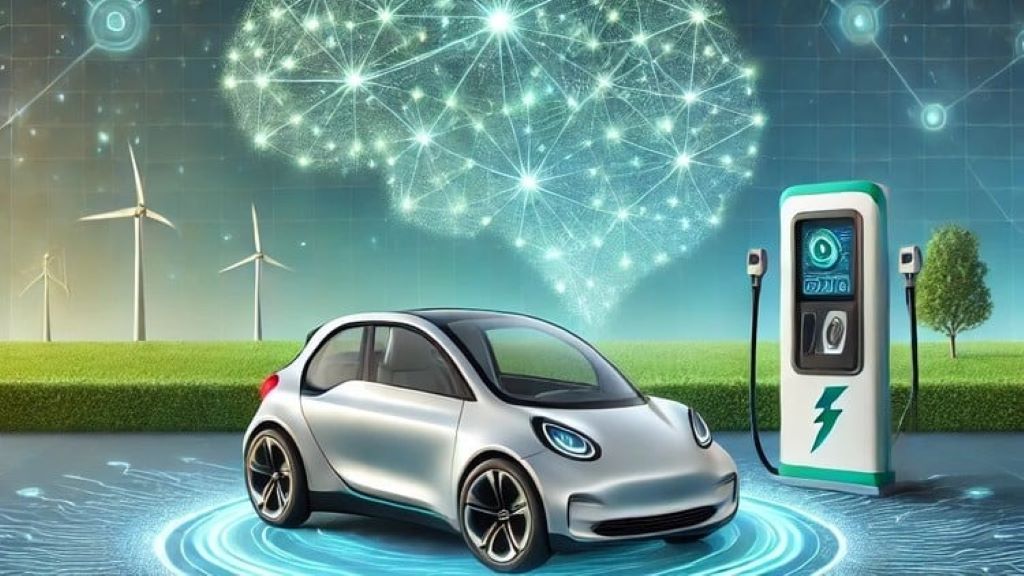
The Future of AI and Digital Interfaces in EVs
-
Emotion-Sensing AI for Enhanced Comfort
Future EVs may incorporate AI that detects driver mood via facial recognition and adjusts:
- Lighting and music to reduce stress.
- Driving modes for a smoother or more dynamic ride.
-
Vehicle-to-Everything (V2X) Communication
AI will enable EVs to communicate with:
- Other cars to prevent accidents.
- Smart grids for optimized charging during off-peak hours.
- City infrastructure for real-time traffic management.
-
Hyper-Personalization with Machine Learning
As AI evolves, EVs will offer deeper personalization, such as:
- Learning driving styles and adjusting performance accordingly.
- Recommending entertainment based on past preferences.
- Integrating with smart home systems for seamless transitions.
FAQs: AI and Digital Interfaces in EVs
-
How does AI improve EV battery efficiency?
AI optimizes battery usage by analyzing driving patterns, weather, and terrain to extend range and suggest optimal charging times.
-
Are digital interfaces in EVs safe to use while driving?
Yes, modern designs prioritize minimal distraction with voice controls, AR HUDs, and simplified menus.
-
Will AI make EVs fully autonomous soon?
While progress is rapid, full autonomy requires further advancements in AI and regulatory approvals. Current systems offer robust driver assistance.
-
How do voice assistants in EVs work?
They use NLP to understand commands, integrate with navigation, climate, and entertainment systems, and improve with usage.
Conclusion: The Road Ahead for Smart EV Experiences
AI and digital interface design are revolutionizing how we interact with electric vehicles, making them safer, smarter, and more intuitive. From predictive maintenance to emotion-sensing cabins, the future of EVs is deeply intertwined with intelligent technology.
As automakers continue to innovate, drivers can expect even more seamless, personalized, and connected experiences. The question isn’t if AI will redefine mobility—it’s how soon.
Ready to experience the next generation of EVs? Explore the latest AI-driven models and discover how smart technology can enhance your driving experience today!
CTA: Want to stay updated on the latest EV innovations? Subscribe to our newsletter for cutting-edge insights!
Read More: Bizway AI: Supercharging Your Business with AI-Powered Automation