
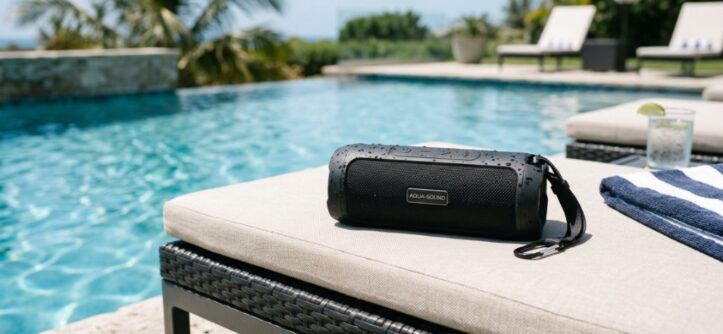
You just bought a “waterproof” speaker. You take it to the pool. A splash hits it. Ten minutes later, it starts crackling and dies. Sound familiar? The market is flooded with products that claim IP67 ratings but fail under real-world use. To avoid bad waterproof speaker purchases, you need to look past the marketing hype and understand the actual standards, build quality, and sonic performance that separate a pool-party lifeline from a disposable paperweight. This guide will arm you with the knowledge to spot a dud before you hand over your credit card.
What Does “Waterproof” Actually Mean for a Speaker?
Waterproof is not a binary feature. It is a specific rating scale, and most bad speakers exaggerate or completely fabricate their claims. Understanding the Ingress Protection (IP) rating system is your first line of defense against a bad purchase.
Decoding IP Ratings: IPX7 vs. IP67 vs. IP68
An IP rating always has two numbers. The first digit (0-6) covers solid particle protection (dust). The second digit (0-9) covers liquid ingress. An “X” means no data is available for solids. IP67 means fully dust-tight and can be submerged in 1 meter of water for 30 minutes. IP68 means dust-tight and can be submerged deeper than 1 meter (the specific depth is set by the manufacturer, often 1.5m to 2m). If a speaker says “waterproof” but lists no IP rating at all, that is a massive red flag.
Why “Splashproof” Is Often a Lie
Many cheap speakers use the term “splashproof” loosely. They might have a fabric mesh that repels a few drops but soaks through under a light rain. A true splashproof speaker should have an IPX4 rating. If the box says “splashproof” but the product page lacks an IPX4 certification, you are likely buying a standard speaker that will fail with any significant moisture.
Common Waterproof Marketing Traps
Be wary of phrases like “water-resistant for daily use” or “tough enough for the shower.” These are vague marketing terms. Stick to the IP standard. Also, watch for fake IP ratings that list impossible numbers like “IP69K” on a $20 speaker (IP69K is a specialized cleaning standard, not a typical consumer rating). Always verify the rating on the manufacturer’s official website.
Why Do Cheap Waterproof Speakers Fail So Quickly?
The failure of a budget waterproof speaker rarely comes from a single flaw, but from a combination of poor materials, shoddy assembly, and unrealistic performance claims. Understanding the common failure points helps you identify them before purchase.
The Seal Is the Speaker’s Weakest Point
Waterproofing relies on rubber gaskets, O-rings, and adhesive seals around the charging port, buttons, and driver housing. In cheap speakers, these seals are made from inferior rubber that hardens and cracks within weeks. They are often poorly seated during manufacturing, leaving microscopic gaps. When you press a button, you can actually push water through the gap. Look for a speaker with a sealed charging port cover (with a visible rubber gasket) and tactile, solid buttons that don’t feel loose.
Low Quality Drivers and Passive Radiators
A bad waterproof speaker often uses paper or very thin plastic cones for the speaker drivers. These are lightweight and cheap, but they absorb moisture over time, distorting sound and eventually rotting. The passive radiators (those vibrating discs on the ends) are often glued on haphazardly. If the glue fails, the seal is broken, and water rushes in. A good speaker uses polypropylene or treated fiber cones that resist moisture absorption.
Battery and Electronics Vulnerabilities
The electronics inside a waterproof speaker are usually coated with a conformal coating to protect against condensation. In cheap models, this coating is either absent or applied poorly. Water seeps in, shorts a capacitor, and the speaker dies. Additionally, cheap lithium-ion batteries lack the robust protection circuits needed to handle the slight pressure changes that occur during submersion, leading to swelling or complete failure.
How to Test a Speaker’s Waterproof Claim Before You Buy
You cannot drop a speaker in a bucket at the store, but you can perform several checks on the box, the product page, and the physical hardware that reveal the truth about its waterproofing. These tests are your best tools to avoid bad waterproof speaker decisions.
Check the Charging Port Cover
This is the easiest physical test. Open the charging port cover. Is it a thick, flexible rubber flap that clicks shut? Or is it a flimsy plastic snap? The rubber flap should be a snug fit, and you should feel resistance when closing it. Look for two layers: a soft outer seal and an inner rubber gasket. If the cover is loose or made of hard plastic, the speaker will fail quickly.
Perform the Weight Test
A truly waterproof speaker is heavier than a non-waterproof speaker of the same size. The extra weight comes from the thicker rubber casing, the heavier battery (needed for protection circuits), and the reinforced internal chassis. If a speaker feels suspiciously light for its size, it likely lacks these critical components. Pick it up. If it feels hollow or flimsy, it probably is.
Read Verified Customer Reviews for Leaks
Skip the 5-star “works great” reviews. Sort by “Most Recent” or “Critical” reviews. Look for specific phrases: “stopped working after a splash,” “water got inside the speaker grill,” “charging port broke after first use,” or “sound got muffled after rain.” A single negative review might be a fluke, but a pattern of water-related failures is a clear warning. Compare the ratio of water-failure complaints to total reviews.
Which Sound Features Matter Most in a Wet Environment?
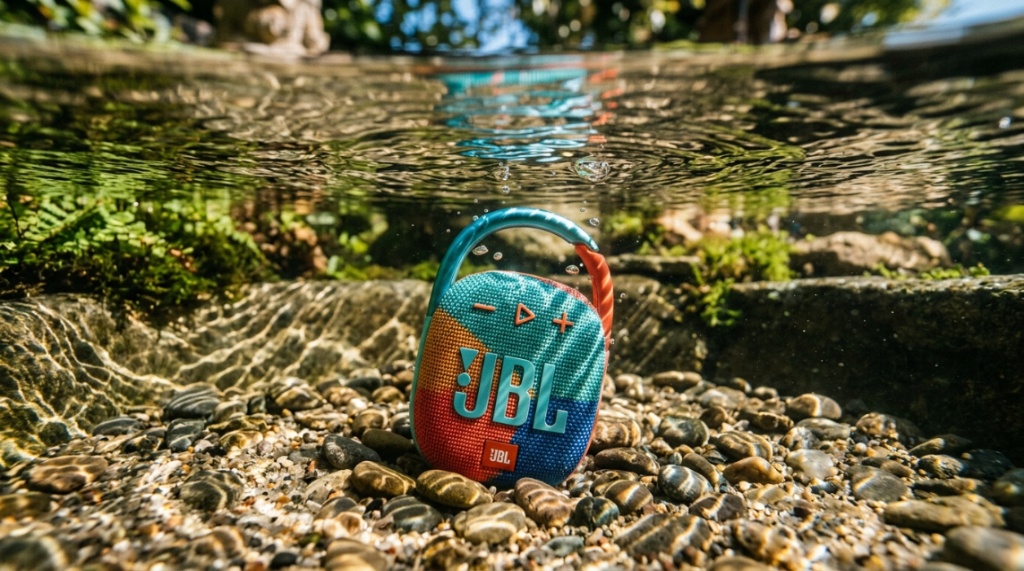
Audio quality is subjective, but sound performance in a wet or outdoor environment has specific technical requirements. A speaker that sounds amazing in a quiet room might sound terrible next to a pool. You must prioritize clarity, dispersion, and volume handling over bass depth.
Why Bass Suffers in Outdoor and Wet Spaces
Bass requires air pressure to move. Outdoors, there are no walls to bounce sound off, so bass dissipates quickly. In a shower or pool area, water and tile create sound reflection issues. A good waterproof speaker compensates with a more powerful amplifier and a larger passive radiator. If a speaker relies solely on a tiny driver for bass, it will sound tinny outdoors. Look for a speaker with a dedicated woofer or a very large passive radiator (at least 2 inches in diameter).
Directivity and 360-Degree Sound
When you set a speaker on a pool deck or a boat, people are sitting all around it. A speaker that projects sound in one direction (unidirectional) will only cover half the area. A true 360-degree speaker distributes sound evenly. Check the product images. If the speaker has drivers on two or more sides, or uses a cylindrical design with a central driver, it is built for even dispersion. This is critical for group listening.
Volume and Distortion Under Load
Cheap speakers often claim high wattage (e.g., “30W output”) but distort horribly at 60% vosides ork for reviews that mention “clean sound at max volume” or “no crackling at high volume.” A speaker that distorts at high volume is not just bad for audio—it is often a sign of a cheap amplifier that will overheat and fail. Trust your ears. If you can hear buzzing or rattling at moderate volume, walk away.
Can a Cheap Waterproof Speaker Ever Be Good?
Yes, but your expectations must be realistic. There is a floor price for quality components. A $20 speaker cannot deliver the same performance or durability as a $60 speaker. Understanding the price-to-quality curve helps you set a realistic budget to avoid bad waterproof speaker traps.
The $20 Trap vs. The $50 Sweet Spot
Speakers under $25 almost always cut corners. They use cheap seals, low-capacity batteries, and weak drivers. They might pass a quick splash test but fail after a few weeks. The $40 to $60 range is the sweet spot. This price allows for a decent IPX7 rating, a rubberized exterior, a 10W-15W driver, and a battery that lasts 8-10 hours. Brands like Anker Soundcore, Tribit, and JBL (at entry level) offer reliable options in this range.
What You Sacrifice with a Budget Model
With a budget model, you generally sacrifice sound clarity, bass depth, and battery life. You also sacrifice durability: the rubber may feel less premium, the buttons may be spongier, and the mesh may be thinner. However, you do not have to sacrifice basic waterproofing. Even a budget model should be genuinely IPX7 certified. If it is not, do not buy it, regardless of the price.
Three Budget Brands That Don’t Cut Corners
- Anker Soundcore: Consistent IPX7 ratings, solid app support, and decent balanced sound. The Soundcore 2 is a benchmark.
- Tribit: Known for better bass than competitors in the same price range. Their XSound Go is a popular, reliable pick.
- JBL: The Clip series and Go series offer strong build quality, though they are pricier for their size. They are easy to find and have good customer support.
Once you have secured a reliable speaker, you should also consider your gear for solo workouts. If you need reliable audio while active, check out our guide on Sweatproof Sports Headphones for Intense Training Sessions to ensure your equipment survives your most grueling workouts.
How to Spot Fake IP Ratings and Certifications
Counterfeit certifications are rampant on e-commerce platforms. Sellers will list any number they think looks good. You need to be a detective to avoid bad waterproof speaker listings that are outright lies. Real certifications have a paper trail.
Cross-Reference the Official Brand Website
If you are buying on Amazon, Walmart, or AliExpress, go to the manufacturer’s official website. Find the exact model. Does their site list the same IP rating? If the official site says “IPX5” but the Amazon listing says “IPX7,” the Amazon listing is likely incorrect or a fake version of the product. Do not trust the third-party seller’s copy.
Look for Compliance Marks (CE, FCC, RoHS)
Real certified electronics carry compliance marks on the box and in the manual. In the EU, look for a red “CE” mark. In the US, look for a “FCC” ID. In many regions, there is a “RoHS” mark (Restriction of Hazardous Substances). If a product page shows a generic “CE” mark that looks blurry or is in the wrong font, it is likely a fake. You can sometimes search the FCC ID online to verify the product.
Beware of “Waterproof” Without a Number
If the listing says “waterproof” but never specifies a number (IPX5, IPX7, etc.), it is a lie. They are counting on you to assume it is IPX7. If they had a real rating, they would flaunt it. This is the single biggest red flag in online speaker shopping. If you see this, close the tab immediately. For a list of verified, trusted models that have passed real testing, you can avoid bad waterproof speaker choices by reviewing curated lists that do the dirty work for you.
What to Look for in an Outdoor and Pool Speaker
Using a speaker at the pool or beach adds unique stresses: sand, chlorine, saltwater, and extreme heat. Your waterproof speaker needs to survive more than just water. It needs to resist corrosion and physical impact. These environmental factors are where most speakers fail.
Saltwater and Chlorine Resistance
Saltwater is a conductor and is highly corrosive. Chlorine is a powerful oxidizer. A standard IPX7 speaker might survive a freshwater dip but corrode within days after a splash in the ocean or a pool. Look for speakers specifically marketed as “saltwater resistant” or “pool-proof.” These have special coating on the metal grilles and internals. If you must use a standard waterproof speaker in the ocean, rinse it thoroughly with fresh water immediately after use.
Float or Sink: Which is Better?
Floating speakers are convenient for pools but have downsides. A floating speaker requires a hollow, buoyant design, which often compromises bass reproduction and overall sound quality. A sinking speaker can be heavier and produce better sound, but you have to be careful not to drop it in the deep end. For most people, a sinking speaker with a lanyard is the better choice. Just tie it to your cooler or chair.
Sand and Dust Protection
Sand is abrasive. It gets into charging ports, cracks in the rubber, and mesh grilles. A rating of IP6X (dust tight) is ideal for beach use. If your speaker only has an IPX7 rating (no dust protection), you need to be extremely careful. Always rinse the speaker with fresh water to flush sand out of the charging port before opening the seal. A speaker that traps sand inside its rubber casing will have a sticky button that eventually stops working.
Conclusion
Buying a waterproof speaker does not have to be a gamble. By focusing on genuine IP certifications, solid build quality (especially the charging port seal), and realistic expectations for sound performance, you can avoid the dozens of bad options that flood the market. Remember to cross-reference ratings, read critical reviews for water damage stories, and prioritize known budget-friendly brands that have a track record. You don’t need to spend a fortune, but you do need to spend wisely. Next time you see a deal that looks too good to be true, apply these checks. Your next speaker should be a reliable companion for the pool, the shower, or the trail—not a frustrating mistake that dies after a single splash. Choose quality, check the details, and enjoy your music wherever water takes you.
Frequently Asked Questions
Can I use a waterproof speaker in the shower every day?
Yes, but you need a speaker with a rating of IPX7 or higher. Steam can be more damaging than direct water splashes because it condenses inside the electronics. A daily shower speaker should have robust internal conformal coating to prevent moisture damage from steam.
Is IPX5 enough for outdoor use?
IPX5 is good for light rain and splashes, but it is not submersible. For a pool deck or a rainy hike, IPX5 is acceptable if you are careful. For beach or pool use where submersion is possible, you need at least IPX7.
How long will a waterproof speaker last before the seal degrades?
With proper care (rinsing after saltwater use and not dropping it), a well-built speaker’s seal should last 2-3 years. Over time, rubber gaskets dry out and crack. If you notice the charging port cover feels loose or doesn’t snap shut, replace the speaker.
Why did my waterproof speaker stop working after charging?
This is usually caused by water trapped in the charging port. After use, you must ensure the charging port is bone dry before plugging in the cable. Even a single drop of water inside the port can short-circuit the charging board. Use a compressed air duster or wait 4-6 hours after use to charge.
Can a waterproof speaker play music underwater?
Technically, yes, if it is rated IP68. However, sound travels differently underwater. The audio will sound extremely muffled and distorted to human ears. It is not practical for listening underwater. The feature is more for durability and accidental drops than for actual underwater audio enjoyment.
Is it worth buying a waterproof speaker if I only use it indoors?
Probably not. Waterproofing adds cost and often compresses sound quality (due to the sealed design and smaller enclosures). For indoor use, a non-waterproof speaker will sound better and be cheaper. Only buy waterproof if you actually take it near water.
How do I clean my waterproof speaker after a pool party?
Rinse it thoroughly with fresh, cool water. Do not use soap, chemicals, or a pressure washer. Gently shake out excess water from the speaker grille. Allow it to air dry in a shaded, well-ventilated area for at least 24 hours before charging. Never use a hairdryer on the speaker.