

Every business needs a sharp logo because strong branding builds instant trust with customers. Recent studies show that over 75% of consumers recognize brands through visual identity, while consistent branding may increase revenue by up to 23%. Therefore, understanding why vector graphics blurry after export happens helps protect your professional image. This guide explains practical ways to prevent fuzzy vector logos in New York, NY through smart design and export decisions.
Understand Why Vector Logos Become Fuzzy
Many blurry logos result from incorrect export settings instead of poor design quality. Likewise, designers often overlook resolution requirements for different digital platforms. Reviewing designing a web page principles also helps maintain consistent logo clarity across websites.
Vector files remain mathematically scalable without losing quality during resizing. However, raster exports convert vectors into pixels that may reduce visual sharpness. Consequently, choosing incorrect dimensions creates fuzzy results on many devices.
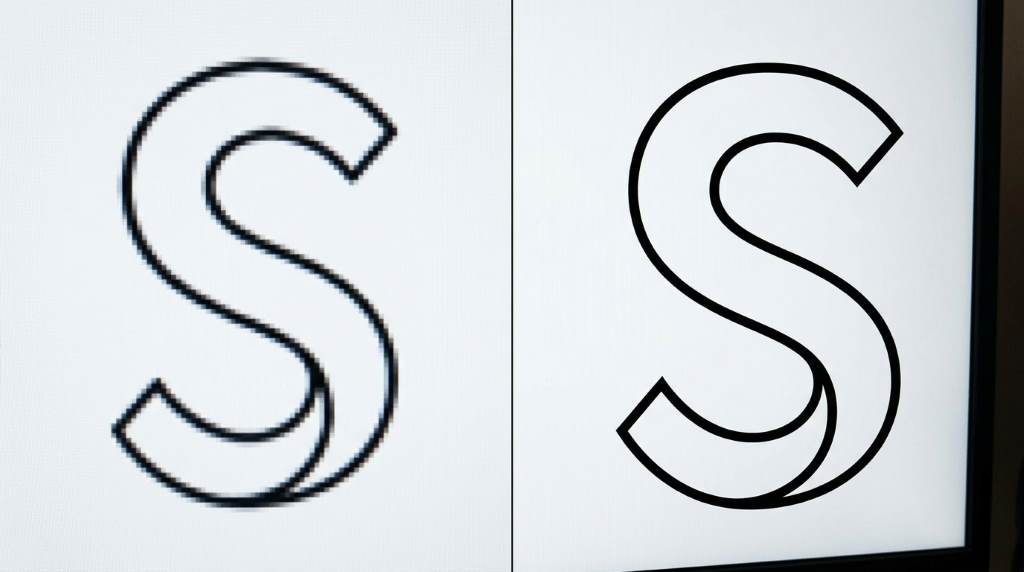
Common Reasons for Blurry Logos
- Exporting with low pixel dimensions.
- Using incorrect file formats.
- Scaling raster images repeatedly.
- Applying unnecessary compression.
- Ignoring display resolution requirements.
Create Logos with Proper Vector Foundations
Every successful logo begins with clean vector paths and organized artwork. Moreover, removing unnecessary anchor points improves rendering performance and visual precision. Reading about Dribbble design success also encourages stronger professional design habits.
Design software like Adobe Illustrator creates scalable artwork using mathematical calculations. Therefore, every curve stays smooth regardless of final output size. Clean construction also reduces unexpected rendering problems during exports.
Use Professional Design Practices
- Create artwork using vector tools only.
- Keep shapes simple and balanced.
- Align objects with pixel grids.
- Convert text into outlines before delivery.
- Organize layers for easier editing.
Select the Right File Format Every Time
Different platforms require different file formats for the best visual quality. Meanwhile, selecting the proper export option protects logo clarity across websites and marketing materials. Learning about AI digital interface design also highlights modern display expectations.
SVG files preserve scalability for modern websites without losing quality. Likewise, EPS and PDF formats support professional printing with excellent precision. AI files remain useful for future editing and design revisions.
Recommended File Types
- SVG for websites and responsive interfaces.
- EPS for commercial printing.
- PDF for presentations and documents.
- AI for editable master files.
- PNG only for finished raster graphics.
Optimize Export Settings Carefully
Export settings influence logo quality more than many designers realize. Therefore, always verify dimensions before saving the final version. Careful preparation prevents unnecessary quality loss later.
Choose appropriate pixel dimensions for digital displays based on intended usage. Similarly, export multiple sizes instead of stretching one raster version repeatedly. This approach keeps logos crisp across every screen.
Export Checklist
- Select the correct color profile.
- Confirm artboard dimensions.
- Export SVG whenever possible.
- Create high resolution PNG versions.
- Review exported files before publishing.
Use Pixel Alignment for Digital Displays
Pixel alignment improves edge sharpness on websites and mobile applications. Consequently, logos appear cleaner even at smaller display sizes. Proper alignment also prevents uneven rendering.
Snap important shapes to pixel boundaries during the design process. Furthermore, avoid half pixel positioning because it creates anti aliasing artifacts. Small adjustments often produce noticeably sharper graphics.
Maintain Consistent Color Profiles
Color profiles affect appearance across digital and printed materials. Likewise, mismatched settings sometimes reduce overall visual quality after export. Consistent management supports predictable branding.
Use RGB for digital applications and CMYK for commercial printing projects. Additionally, embed color profiles whenever software supports that feature. Designers should verify every exported file before distribution.
Prepare Logos for High Resolution Displays
Modern screens display finer details than previous generations of monitors. Therefore, businesses should prepare logo assets for high density displays. This strategy improves customer perception immediately.
Create multiple optimized versions for desktop, tablet, and mobile platforms. Meanwhile, responsive websites automatically select appropriate assets when available. Better preparation reduces loading problems while preserving quality.
Test Logos Before Public Release
Testing reveals hidden issues before customers notice visual imperfections. Consequently, businesses avoid costly branding mistakes across marketing channels. Thorough reviews strengthen professional credibility.
Open exported files using different browsers, operating systems, and mobile devices. Likewise, compare printed samples with digital versions whenever possible. Small corrections today prevent larger problems tomorrow.
Work with Experienced Vector Designers
Professional designers understand advanced export techniques and production requirements. Therefore, they deliver files that remain sharp across every application. Their expertise also reduces expensive revisions.
Request complete source files together with web ready assets after project completion. Furthermore, ask for SVG, EPS, AI, PDF, and PNG formats. Comprehensive file packages improve long term flexibility.
Conclusion
Preventing fuzzy vector logos requires thoughtful planning, clean artwork, and careful export settings. Moreover, regular testing ensures consistent quality across websites, print materials, and digital platforms. Following these proven practices protects your visual identity and strengthens customer confidence. Start reviewing your logo files today and invest in professional vector standards for lasting brand success.
Frequently Asked Questions
Why does my vector logo look blurry online?
Incorrect export settings or low resolution raster files usually cause blurry online logos.
Should I use SVG for my website logo?
Yes, SVG provides excellent scalability and maintains sharp quality across different screen sizes.
Can resizing PNG logos reduce quality?
Yes, enlarging PNG files often creates blurry edges because they contain fixed pixels.
Which software works best for vector logo creation?
Adobe Illustrator remains one of the most reliable tools for professional vector logo design.
How often should I test exported logo files?
Test every exported version before publishing to ensure consistent quality across all platforms.